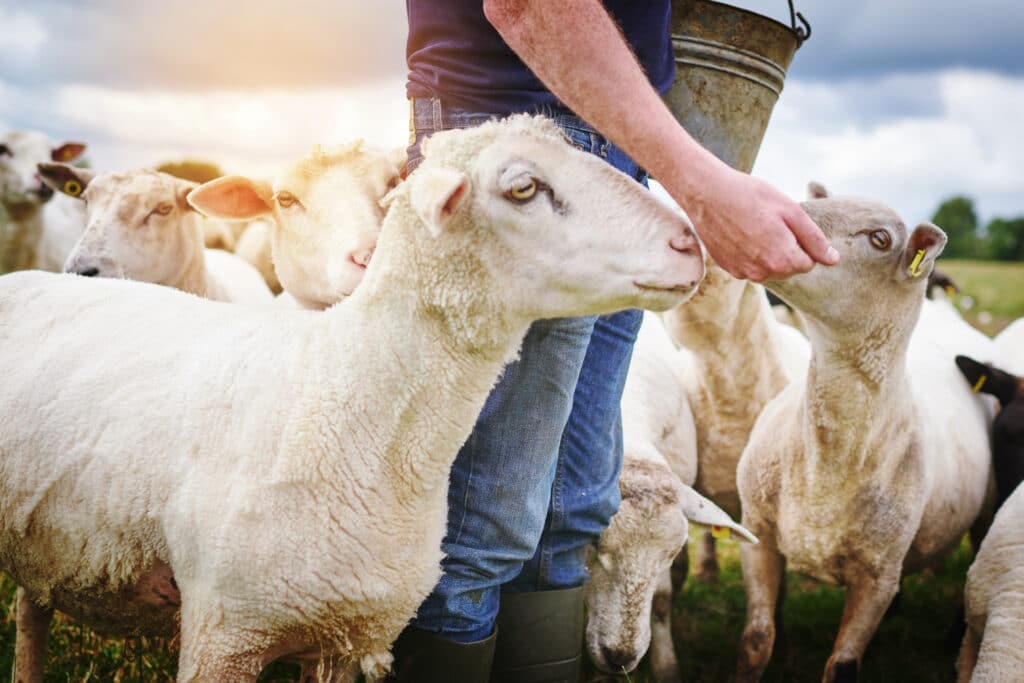
As the cold weather breaks, the feed requirements of a sheep flock change quickly. Cold stress eases, so sheep need less feed to stay warm and pasture quality lifts as growth takes off. But early spring is also lambing season and that pushes the nutritional demands of ewes to their highest point in the year.
The spring flush of rapid green growth boosts available feed, but it brings its own risks: digestive upsets and metabolic conditions like grass tetany. Ewes need the right nutrition to carry and feed lambs while holding condition and fertility, and lambs need a strong start to survive and grow. Getting spring feeding right is one of the biggest levers a producer has over flock performance.
In short: In early spring, ewe energy and protein requirements can rise 2.5 to 3 fold through late pregnancy and early lactation, often beyond what pasture alone can supply. Manage feeding to condition-score targets, watch closely for grass tetany, pregnancy toxaemia and milk fever, and supplement with hay, grain or pellets when pasture falls short.
How Sheep’s Nutritional Needs Change in Spring
Two things happen at once in early spring. Sheep no longer burn energy fighting the cold, which lowers their baseline needs, but ewes in late pregnancy and lactation have demands that climb steeply. Around 70% of a lamb’s birth weight is laid down in the final six weeks of pregnancy and as the lamb grows it crowds the rumen, cutting a ewe’s appetite by up to 30% just when she needs to eat more. That combination is why pasture alone often cannot keep up.
According to NSW Local Land Services, the average daily feed requirements for a medium-framed, 50 kg Merino in good condition (no fleece) are:
| Livestock class | Energy (MJ ME/day) | Protein (%) |
| Dry sheep | 8 | 6 |
| Early pregnancy | 8 | 6 |
| Last month of pregnancy (single) | 14 | 8 |
| Last month of pregnancy (twin) | 18 | 8 |
| Early lactation (single) | 20 | 12 |
| Early lactation (twin) | 26 | 12 |
| 2nd to 3rd month lactation (single) | 14 | 12 |
| 2nd to 3rd month lactation (twin) | 15 | 12 |
Sheep that do not produce wool have a 2 to 3% lower requirement to maintain the same weight.
Energy is the figure that moves most. A dry ewe needs about 8 MJ of metabolisable energy a day, but a twin-bearing ewe needs roughly 18 MJ in late pregnancy and up to 26 MJ in early lactation, more than triple the maintenance need. Lambing usually lines up with the spring flush, so peak pasture growth helps cover some of that demand, but rarely all of it for multiple-bearing ewes.
Protein drives milk production and lamb growth. Good spring pasture is rich in it, often 22 to 26% crude protein at 10 to 12 MJ ME/kg DM and 70 to 80% digestibility. The catch is timing: as pastures mature later in spring, around weaning, both digestibility and protein fall away. That is usually when supplementary feed is needed to keep lambs growing toward market weight.
Minerals and vitamins, especially magnesium, calcium and phosphorus, matter enormously in spring. Lush green feed can be unbalanced, often high in phosphorus but short on calcium and magnesium, which sets up the metabolic problems below. Checking pasture and monitoring intake helps keep the flock on track.
Use Condition Scoring as Your Guide
The most practical way to know whether your feeding is working is condition scoring, which rates a ewe from 1 (very thin) to 5 (over-fat) by feeling along the backbone and short ribs. It is more reliable than a visual check, especially under wool.
Condition Score (CS) targets for ewes:
- Joining: around CS 3 for the best conception
- Six weeks pre-lambing: CS 2.5 to 3
- Lambing: at least CS 2 to 2.5
Score regularly, and where you can, pregnancy scan and manage single and twin-bearing ewes separately so each group is fed to its target. Both thin and over-fat ewes are at higher risk of metabolic disease.
Spring Metabolic Diseases to Watch
The mix of lush, unbalanced pasture and peak nutritional demand makes early spring the highest-risk window for three serious, often fatal conditions. All are far easier to prevent than to treat.
| Condition | Cause | Highest risk | Prevention |
| Grass tetany | Low blood magnesium | After the flush, lactating ewes on lush feed | Magnesium supplement, hay/roughage alongside grazing |
| Pregnancy toxaemia | Energy shortfall (low glucose, ketosis) | Last 6 weeks of pregnancy, twin/triplet ewes | Meet energy needs, avoid sudden feed gaps, hit CS targets |
| Hypocalcaemia (milk fever) | Low blood calcium | Late pregnancy and early lactation | Calcium in the diet (lime in a loose lick), prompt vet treatment |
Grass tetany is caused by a magnesium deficiency in the blood. Young, lush grass and cereals are lower in magnesium than older growth, so the risk peaks after the spring flush during lactation, when ewes have high mineral needs. Prevention means supplying magnesium through hay, roughage or a magnesium supplement alongside grazing.
Pregnancy toxaemia (twin lamb disease) strikes in late pregnancy when a ewe’s energy intake cannot keep up with her lambs, forcing her to break down body fat and produce ketones. Twin and triplet-bearing ewes are most at risk, as are both under-conditioned and over-fat ewes. Steady energy supply and avoiding any sudden feed interruption are the keys.
Hypocalcaemia, or milk fever, is low blood calcium in late pregnancy and early lactation. Providing dietary calcium, such as a loose lick containing lime, helps prevent it, and affected ewes can be treated with a calcium injection if caught early.
Meeting the Gap: Supplement Strategies
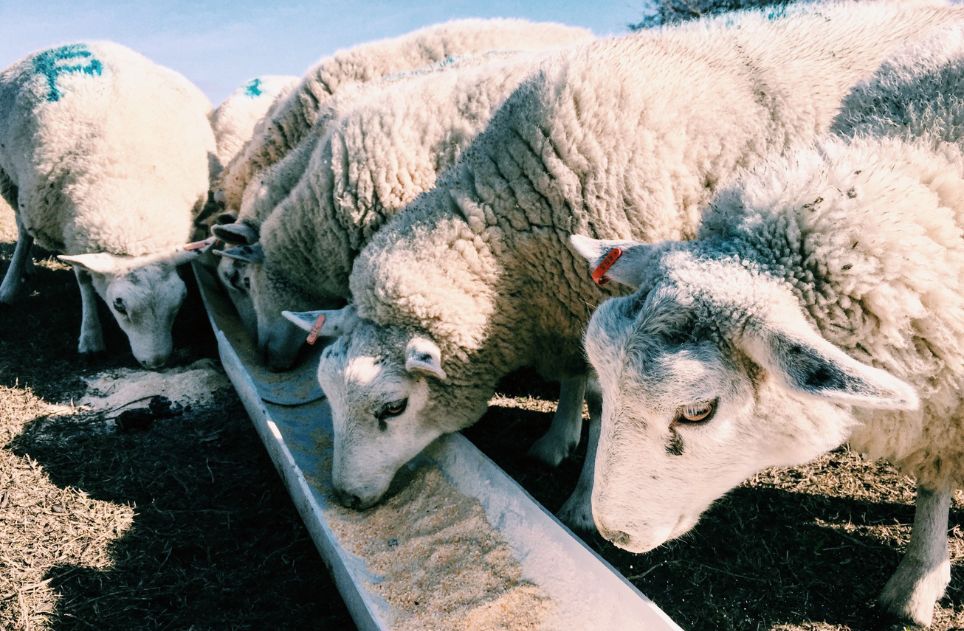
During spring, pasture will support a dry ewe and cover much of the need for pregnant and lactating ewes, but some supplementation is usually still needed to manage metabolic risk and keep ewes and lambs growing. Start by assessing what you have: look for vibrant green pasture and gauge height and density. A feed test gives the most accurate read, but monitoring ewe condition, lamb growth and dung consistency also tells you whether needs are being met.
When pastures mature or conditions start slipping in pregnant or lactating ewes, the main supplement options are:
- Hay is a high-fibre staple often fed alongside pasture anyway. It helps guard against grass tetany by supplying calcium and improving magnesium absorption from grass.
- Grain is often cheaper and more available than hay and is efficient for energy and protein. It must be introduced gradually and fed daily to avoid acidosis. Cereal grains give quick energy, while pulse grains like lupins carry a lower acidosis risk. The same careful introduction applies when finishing lambs on grain.
- Pellets are nutrient-dense, combining processed grain with vitamins and minerals in blends formulated for specific needs such as pregnancy and lactation. They cost more than straight grain but take the guesswork out of balancing a ration.
- Lick blocks are a convenient way to target a specific shortfall like magnesium, but they supply little energy or protein, so they complement rather than replace a feed.
For more on feeding out efficiently, see our guide on trail feeding stock, and on holding condition in tougher seasons, maintaining livestock condition.
CowraFeed Seasons Range
CowraFeed’s Seasons Range, available as a Grain Mix, Pellet or Concentrate Pellet, is formulated to maintain body condition and milk production in ewes through pregnancy, lambing and any nutritional shortfall. The Spring Seasons product adds magnesium and calcium to help with the higher demands around lambing and reduce grass tetany risk, plus selenium and zinc to support joining and conception. Used through spring and lambing, it helps hold ewe condition, support milk production, prevent mineral deficiencies and give lambs a strong start. To understand how these blends are put together, see what goes into your feed.
Download the Seasons Range Overview
Frequently Asked Questions
- Do sheep need supplementary feed in spring?
Often, the pregnant and lactating ewes do. A dry sheep can usually meet its needs from good spring pasture, but ewes in late pregnancy or early lactation have requirements 2.5 to 3 times maintenance and may need hay, grain or pellets to fill the gap, especially as pastures mature. - What is grass tetany and how do I prevent it?
Grass tetany is an often-fatal condition caused by low blood magnesium, most common in lactating ewes on lush spring growth. Prevent it by supplying magnesium through hay, roughage or a magnesium supplement or lick alongside grazing. - What condition score should ewes be at lambing?
Aim for a condition score of 2.5 to 3 about six weeks before lambing and at least 2 to 2.5 at lambing. Score ewes regularly and, where possible, feed single and twin-bearing ewes separately to their targets. - Why are twin-bearing ewes higher risk in spring?
They carry more lamb growth and have less rumen room, so their energy needs are higher while their appetite is lower. That makes them more prone to pregnancy toxaemia and milk fever, which is why they benefit from being managed and fed as a separate group. - How should I introduce grain to sheep?
Introduce grain gradually over a couple of weeks and feed it daily to let the rumen adjust and avoid acidosis. Pulse grains such as lupins carry a lower acidosis risk than cereal grains, and roughage should always be available alongside.
Setting Your Flock Up for a Strong Spring
Spring nutrition is about matching feed to a fast-changing picture. Ewe demands climb steeply into late pregnancy and lactation, pasture quality rises then falls, and the risk of grass tetany, pregnancy toxaemia and milk fever runs high. Score your ewes regularly, manage singles and twins to their targets, keep an eye on pasture, and supplement with the right feed before condition slips. Do that, and you set your ewes and lambs up for a productive, healthy season.
Need help choosing a spring feed? Explore the CowraFeed sheep range or find your nearest stockist.