Getting lambs market-ready quickly and profitably comes down to the finishing diet. With feed making up roughly two-thirds of the cost of finishing a lamb, the ration you choose has a direct line to your bottom line. The right diet supports steady weight gain, hits market specifications sooner and produces consistent, quality meat yields.
What “Finishing” Means and When to Start
Finishing is the final growth phase, where lambs put on weight and are conditioned to meet market specifications. It typically begins after weaning from around three months of age or 15 kg liveweight. It then continues until lambs reach their target sale weight.
The aim is to maximise weight gain in the shortest practical time without laying down excess fat too early. A well-formulated finishing ration can drive average daily gains of 200 to 250 grams a head, meaning lambs reach turn-off weight weeks faster than they would on pasture alone.
There is no single “best” finishing diet. The right choice depends on your location, production system, target market and the cost and availability of feed. Most producers get the strongest results from a combination of grain or pellets and forage, rather than relying on a single feed.
In short: A good lamb finishing diet supplies around 14-16% crude protein and 12 or more megajoules of energy per kilogram of dry matter, always paired with a fibre source. Introduce grain gradually over two to three weeks to avoid acidosis and keep clean water available at all times.
Nutritional Requirements of Finishing Lambs
Whatever feed you use, the ration must meet the lamb’s core nutritional needs. Get the balance right and growth follows.
- Water: The most important nutrient of all. Clean, constant access supports intake, digestion and growth and minerals in the water can aid the uptake of other nutrients. Lambs on dry, grain-based diets drink more, so water must never run short.
- Energy: The main driver of weight gain and fat deposition in the finishing phase. Carbohydrates and fats from cereal grains supply it. Aim for a ration around 12 or more megajoules of metabolisable energy per kilogram of dry matter.
- Protein: Needed for muscle growth and healthy weight gain. Finishing lambs do best on around 14 to 16% crude protein. Younger, lighter lambs need protein at the higher end of that range, while heavier lambs nearing finish shift their preference toward energy. A bare maintenance floor sits near 7 to 8%, well below what growing lambs need to thrive.
- Vitamins and minerals: Calcium, phosphorus and sulphur are the key macro-minerals, alongside vitamins A, D and E. On grain-based diets, the calcium to phosphorus ratio matters: aim for around 2:1 to reduce the risk of urinary calculi (water belly) in wether and ram lambs.
| Target | Finishing lamb guide |
| Crude protein | 14 to 16% (higher for lighter lambs) |
| Metabolisable energy | 12+ MJ ME/kg dry matter |
| Calcium to phosphorus | Around 2:1 |
| Average daily gain | 200 to 250 g/head/day |
| Roughage | Always include a fibre source |
Feed Options for Finishing Lambs
The three most common finishing feeds are grain mixes, pellets and pasture. Each has a place and they often work best in combination.
| Feed option | Strengths | Watch-outs |
| Grain mixes | High energy for rapid, efficient weight gain; flexible; pairs well with grazing | Needs careful introduction to avoid acidosis; must be balanced with protein, minerals and fibre |
| Pellets | Consistent nutrition in every bite; no selective feeding; easy to handle | Quality is harder to judge by eye; cost per tonne can be higher |
| Pasture | Lowest cost where available; natural diet; lambs gain exercise and condition | Growth depends on pasture quality and season; often needs supplementing to finish |
Grain mixes are a popular finishing feed because they deliver concentrated energy and protein for fast, efficient weight gain. A balanced blend of cereal grains, a protein source and added minerals gives lambs a precise, repeatable diet and grain pairs easily with grazing or other systems. Grain mixes also offer flexibility in feeding strategies, as they can be easily combined with grazing or other feeding systems, depending on farm resources and environmental conditions.
Pellets compress a balanced ration into a uniform form, so every lamb eats the same nutrients and cannot pick out favourites. That consistency suits even finishing across a mob, though pellet quality is harder to assess visually than loose grain. Because pellets are concentrated, they allow precise control over the lambs’ diet, ensuring the right balance of energy and protein during the critical finishing phase. Pellets also reduce the risk of selective feeding, so lambs consume a well-rounded diet rather than picking out favoured ingredients. One downside: feed quality is harder to gauge by visual inspection compared with other forms.
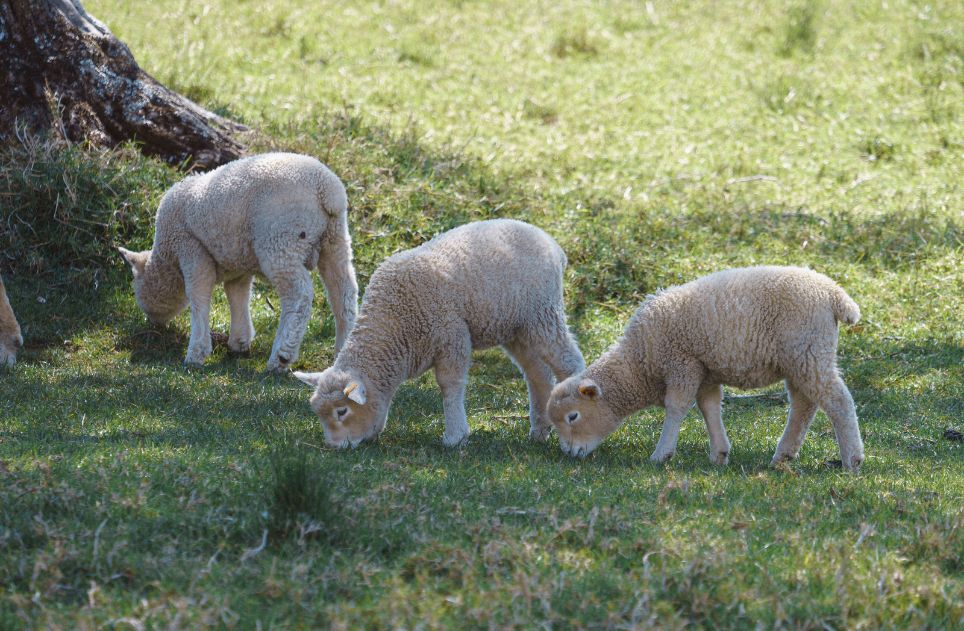
Pasture is the lowest-cost option when available and is a natural fit for lamb. Pasture-fed lambs graze on a diverse mix of grasses and forages, giving them a rich, varied diet. The exercise and freedom to roam also promote strong muscle development and overall fitness, while pasture provides essential vitamins and minerals to support their health. Quality and quantity vary with the season, so most producers supplement pasture with grain or pellets to finish lambs reliably and meet market weights on time. Pasture finishing reduces reliance on costly feeds and helps farmers produce premium-quality lamb. For more on seasonal pasture nutrition, see our guide to key nutrition for sheep in early spring.
Lamb Finisher Blend
csg’s Lamb Finisher Blend is a grain-based feed designed for weaned lambs from around three months of age or 15 kg liveweight. This high-protein blend combines cereal grains and oils with a vitamin and mineral-supplement pellet.
That pellet contains Acid Buf, which buffers against lactic acidosis. It also contains a mix of vitamins, minerals and trace elements to support animal health. Because it is grain-based, introduce it at a low rate of about 0.25% of bodyweight per day, then build up over 9 to 10 days to a full rate of 1 to 2% of bodyweight per animal per day. Feed it in troughs or self-feeders (adjust the slides on self-feeders to regulate intake), always alongside a fibre source such as cereal hay or straw.
Lamb Finisher Pellet
An excellent choice for intensive feed set ups, the Lamb Finisher Pellet is formulated with the protein, energy and minerals growing and finishing lambs need. This pellet blend is suited to lambs weighing between 15 to 60 kilograms. These grain-based pellets give lambs an extra boost on the way to sale weight.
To reduce the risk of acidosis (grain poisoning), introduce the pellets gradually and always ensure lambs have access to a fibre source for proper rumen function.
Pair the pellets with cereal hay or straw and always maintain access to clean fresh water.
Introducing Grain Safely and Avoiding Acidosis
The biggest risk when finishing on grain is acidosis, which happens when lambs eat too much grain too quickly and the rumen turns acidic. It can cause scouring, loss of appetite, a depressed, “tucked-up” appearance and in severe cases, death.
The fix is a gradual introduction. Start lambs on a small amount of grain and increase it gradually over two to three weeks, giving the rumen microbes time to adapt. A few practical rules:
- Always provide roughage. A fibre source such as hay or straw helps keep the rumen functioning and slows grain breakdown.
- Keep feeding consistent. Once lambs are on grain, feed regularly so they do not gorge after a gap. If feeding is interrupted, reintroduce grain slowly again.
- Use a buffer. Blends containing a rumen buffer, like the Acid Buf in csg’s Lamb Finisher Blend, add a margin of safety.
- Watch the mob. Pull back the rate if you see scouring or shy feeders.
Practical Feeding Tips
A few habits lift the result from any finishing system:
- Feed test first. Grain and forage quality vary widely. A feed test confirms energy and protein levels so you can balance the ration to target, rather than guessing.
- Make changes slowly. Every ration change should be gradual to protect rumen health.
- Keep feed and water clean. Mouldy feed and dirty water cut intake and growth. Clean troughs and check water daily.
- Match feeding to the season. In dry spells or tight feed years, supplementary feeding keeps lambs growing. See our guides on trail feeding stock and maintaining livestock condition through a dry winter.
Frequently Asked Questions
- How much protein do finishing lambs need?
Around 14 to 16% crude protein. Lighter, younger lambs need protein at the upper end for muscle development, while heavier lambs nearing finish rely more on energy. Roughly 7 to 8% is only a maintenance floor, not enough for active growth. - How quickly should I introduce grain to lambs?
Introduce grain gradually over two to three weeks, starting at a low rate and building up step by step. This lets rumen microbes adapt and prevents acidosis. Always feed roughage alongside the grain and keep feeding consistent. - What weight should lambs be before finishing?
Finishing usually begins after weaning from around 15 kg liveweight or three months of age, and continues until lambs reach their target market weight. The exact turn-off weight depends on your market specifications. - Is grain or pasture better for finishing lambs?
Both work and a combination is often best. Pasture might be the cheapest option, but grain or pellets deliver concentrated energy for faster, more reliable finishing. Many producers supplement pasture with grain to meet market weights on time. - How do I stop lambs getting acidosis on a grain diet?
Introduce grain slowly over two to three weeks, always provide a fibre source such as hay or straw, feed consistently and consider a ration with a rumen buffer. Reduce the rate if you notice scouring or off-feed animals.
Getting Your Lambs Market-Ready
A balanced finishing diet is the key to healthy, profitable lamb production. Match the ration to your lambs’ weight and your market, hit the protein and energy targets, pair grain or pellets with a fibre source and introduce any grain gradually to protect rumen health. Get those basics right and your lambs will finish faster, more evenly and at lower cost.
To match the right feed to your flock, explore the CowraFeed sheep range or find your nearest stockist.
References
- Nutritional Requirements of Sheep | MSD Manual
- Nutrition and Feeding Systems For market Lamb Finishing | Ontario
- Nutritional Needs of Sheep | Business Queensland
- Production Feeding for Lamb Growth | Meat & Livestock Australia
- A Beginner’s Guide to Raising Sheep | Sheep 101
- Feeding Practices in Sheep | MSD Manual
- Cereal Grains for Finishing Lambs | NDSU Libraries