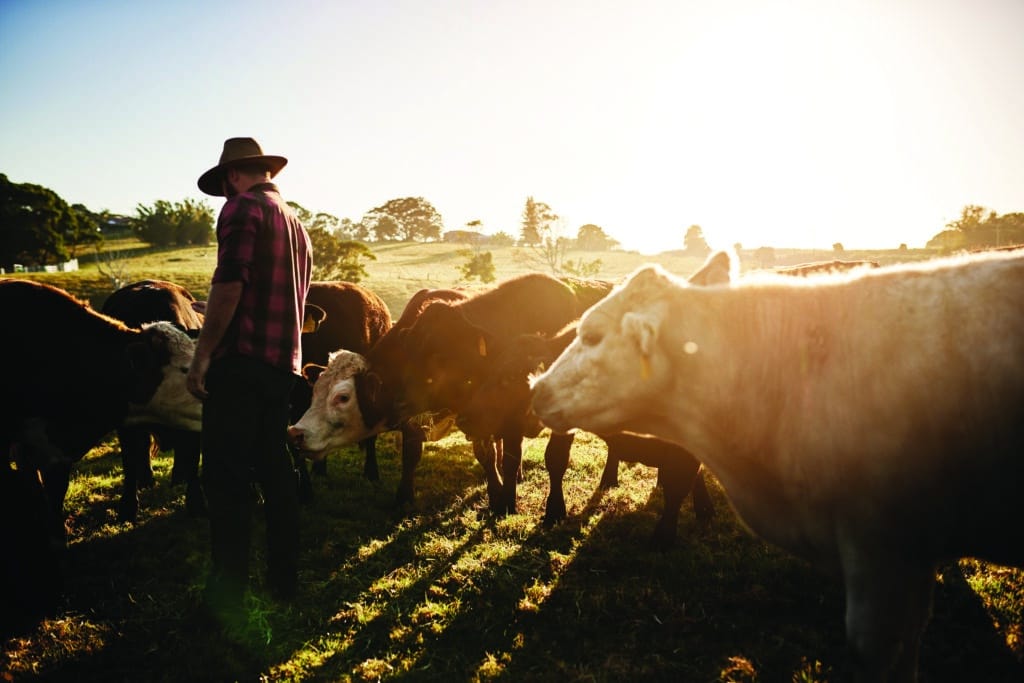
- Winter feeding can be tricky, especially when dry seasonal conditions mean grazing pastures are struggling to keep up with livestock feeding demand through the cold months. The ongoing low rainfall, coupled with decreased soil moisture and freezing temperatures, all restrict plant growth and feed production.
This means that during a dry season, many paddocks fall short of feed supply and nutritional requirements, and from mid-winter to early spring, a phenomenon called the ‘winter feed gap’ happens – just when it’s most important for pregnant animals to maintain condition while preparing for birth and lactation.
During this critical time, the strategies are:
- Monitoring livestock health and nutritional requirements
- Monitoring crop growth and setting up a grazing management system
- Supplementary feeding
- Planning ahead to make sure supplementary feed is available
Monitoring livestock health and nutritional requirements
Though not always true, it often happens that when you’ve got a lower-than-normal feed supply, you also have a higher-than-normal feed demand. This is particularly true in a dry winter when feed supplies are running low, because towards the end of winter and into early spring is when both calving and lambing happens. This only makes winter livestock feeding more challenging.
During this time, it is critical to know the life stage of each of your animals, and feed them accordingly, whether they be yearling lambs and calves, or pregnant ewes and cows. This is important because the demand for energy increases during pregnancy for all livestock, and peaks after birth during the early lactation phases. It then starts to decrease from mid to late lactation, when weaning begins.
- Winter feed requirements for cattle
During winter, the most common forage feeds for cattle are oats, triticale or ryegrass.
When the grazing crops start running short in a dry winter, supplementary feeding of hay is a good option, as rumination produces heat to help keep the cattle warm. Hay will need to be tested though, to check the quality and determine whether it has the required nutrients to maintain cattle throughout colder weather.
At this point, it’s important to note that cold weather increases energy requirements of cattle by around 2% for each degree lower than 0 degrees.
So, it’s good to also consider the need for grain or pellet supplements, which can be used to achieve the full nutritional requirements of your animals. Keep in mind that cattle process grains better when they have been rolled or cracked to release the nutrients.
The table below shows an average of the energy and protein requirements of cows at different stages. In general, growing and lactating cattle require over 10% protein, and energy needs are doubled for a lactating cow in comparison to a dry cow.
Energy and Protein Needs of Cattle
100kg Weaned Calf, with 0.6-0.8kg/day weight gain Cow Early Pregnancy Cow Late Pregnancy Lactating Cow Energy (MJ/day) 30 49-69 85-105 90-137 Crude Protein % 16-18 6 6 10-11 This table provides indicative values based on average requirements and scenarios, and is intended as a general guide only. Figures are based on CSIRO guidelines and Feeding Livestock Victoria resources. For advice tailored to your livestock, please consult a qualified nutritionist.
- Winter feed requirements for sheep
Sheep generally require a lot more feed when it’s cold, and generally need supplementary feeds even in winters when it’s not dry. It is important to meet the increased nutritional needs to maintain both body temperature and condition.
The simplest and most effective way to boost intake is by providing extra good-quality hay, alongside pasture, during the colder months. But in a dry winter when pasture feed is low, and when ewes are pregnant, grain or pellets will be needed to make sure the required energy and protein levels are met.
Unlike cattle, sheep don’t benefit from processed grain. In fact, rolling or cracking grain only raises the risk of acidosis. For this same reason, it is important to introduce grain or grain-based pellets gradually over 7-9 days.
Heavily pregnant ewes are also limited in how much supplementary feed they can physically consume, and pushing intake too far can risk grain poisoning. As a rule of thumb, a twin-bearing ewe in late pregnancy should be offered around 1.6 kg of cereal grain per day, always alongside a roughage source, to meet nutritional requirements.
Energy and Protein Needs of Sheep
Weaned Lamb, with 0.2kg/day weight gain Sheep Early Pregnancy Sheep Late Pregnancy Lactating Sheep Energy (MJ/day) 8-21 6-9 10-14.5 15-21.6 Crude Protein % 15-18 6-8 8-10 12-14 This table provides indicative values based on average requirements and scenarios, and is intended as a general guide only. Figures are based on Feeding Livestock Victoria resources. For advice tailored to your livestock, please consult a qualified nutritionist.
Monitoring crop growth and setting up a grazing management system
Monitoring the growth of your grazing crops during a dry winter is just as important as monitoring the nutritional requirements of your livestock. This means keeping an eye on the growth rate of your pasture throughout autumn and early winter to see if there will be enough feed to meet demand right through to September. Then, plan a grazing management system to balance pasture rotation with the amount of available feed. The better growth rate you have, the longer your livestock can graze the crop before needing to be moved to the next paddock.
In the case of a dry winter, slow plant growth means that there is less available feed, so each pasture will last for a shorter time. But, because the plants are growing slower, the time between each grazing rotation needs to be longer, even though there is less to graze, which is why careful monitoring and planning is so important.
This is where it’s key to use supplementary feeding, to make each pasture last longer while making sure that the animals are still getting what they need. Doing this will give the other paddocks more time to grow before your cattle or sheep are moved to feed on them.
Supplementary feeding
Supplementary feeding during a dry winter fills the ‘winter feed gap’ by providing the extra feed needed to meet an animal’s nutritional needs. It is used to maintain livestock condition when there isn’t enough pasture available, and if managed properly, a supplementary feeding program can extend the use of your grazing crops so there is sufficient pasture available throughout the dry season.
Maintaining good nutrition through a dry winter is key to avoiding setbacks such as stunted growth, significant weight loss, lower milk production, and reduced chances of subsequent pregnancies.
- Hay
Hay is a high-fibre source of nutrition, and often is the first choice for supplementary feeding. In a dry winter, hay is in high demand, and can be hard to source. Depending on the quality of the hay, it may be very low in both energy and protein, which are the most important factors when maintaining the condition of livestock through a dry winter.
- Grain
Grain feeds are often more readily available than hay, and better value in terms of meeting energy and protein requirements. They do need to be introduced slowly and fed daily to avoid digestive issues. Cereal grains are the most common, providing a quick source of energy to help improve animal performance and weight gain. Pulse grains, such as lupins, are also a good source of nutrition, and generally have a reduced risk of acidosis compared to cereal grains.
- Pellets
Pellets are a nutrient-dense feed option, generally combining both processed grains and vitamins to meet livestock needs. Different blends are formulated to meet specific requirements, such as maintaining body condition and milk production, and supporting pregnancy, which makes them ideal as a supplementary feed during dry winters. However, they can be more expensive than grain feeds, due to the processing costs and inclusion of vitamins and minerals.
- Lick Blocks
Lick Blocks are another option, often used alongside supplementary feeds when specific nutrients are lacking due to low-quality pasture and hay. They can be a convenient and cost-effective way of meeting specific nutrient deficiencies, but do not provide significant amounts of energy. Just keep in mind that if animals have a balanced diet, then these additional supplements are not necessary.
Plan ahead for supplementary feed availability
During dry winters, there is often a sudden demand increase for supplementary feeds such as hay or silage, and grain feeds. This generally happens towards the end of winter, when everyone realises they’re going to run out of feed earlier than they expected.
Increased demand can create a shortage, increasing prices and making it a lot harder to get enough to get you through the ‘winter feeding gap’. So plan ahead – consider what feeds you already have in storage, what the growth rates of your grazing pastures might be, and what the feed requirements of each of your livestock are going to be. Also consider how you will store supplementary feeds, and possible spoilage factors.
Only then can you go about sourcing appropriate feeds and locking in cheaper prices, which will hopefully guarantee that you’ll have enough supplementary feeds to maintain livestock condition throughout the dry season.