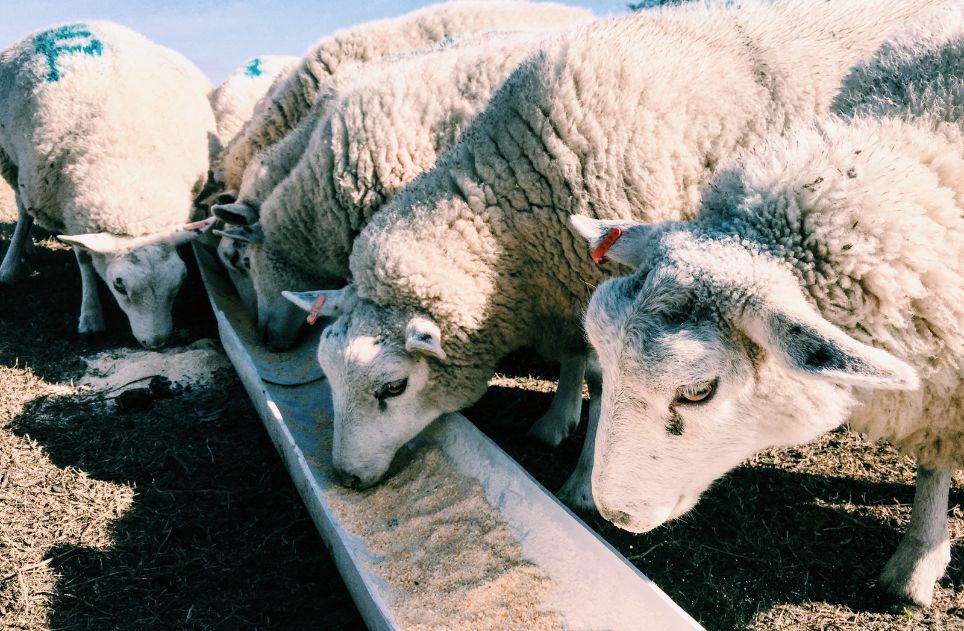
When the pasture runs out, the right sheep feed decides whether your flock holds its condition or not. When you feed too little, you lose condition that can be expensive to win back. Feed the wrong way or introduce grain too fast and you can lose sheep within days.
This guide covers what to feed sheep during the dry season, how much feed should be allotted per head and how to feed it safely until the season breaks.
When Dry Season Feeding Demands Extra Attention
In a dry season, your sheep depend on you for everything they eat. The goal of feeding shifts from growth to survival and maintenance. You’re not trying to put weight on. What you need is to keep your sheep in steady condition until the end of the season, feeding enough to meet their needs and no more.
For a dry adult sheep, that is roughly 2.4 kg of cereal grain a week, or the energy equivalent in sheep pellets, plus roughage and plenty of clean water.
Energy is the priority for adult sheep. When feed is short, it is the energy in the ration that keeps them alive and holding weight.
It’s worth keeping in mind, however, that not every sheep in the mob has the same needs. Young, pregnant and lactating sheep need more energy and protein than dry adults, which is why they’re the ones to prioritise. They also suffer most if the ration falls short.
Beyond energy needs, another reason sheep feeding demands care is that the feed itself carries risk. Grain is cheap, effective energy, but sheep that aren’t used to it can get sick quickly. Getting the amount, the introduction and the routine right is what separates a flock that comes through the dry in good order from one that doesn’t.
Plan Before You Feed
Sheep feed is usually the biggest cost in a dry season, so it’s best to work out the numbers before you commit to feeding.
Two moves often pay off more than feeding alone:
- Reduce numbers early; It is generally cheaper to sell surplus or lower-value stock than to feed them through a long dry spell. Fewer sheep means less feed and less pressure on your country.
- Wean early: Taking lambs off early lets you feed the ewe and the lamb separately, each on what it needs, instead of feeding a lactating ewe to do both. Lambs need good-quality feed and clean water once weaned.
These steps help you budget the feed you will need per head, per week, for the number of weeks you expect. Knowing the cost up front also makes it easier to decide how many sheep to keep.
Know Your Condition Scores
Condition score is your best guide to whether feeding is working. It runs from 1 (very thin) to 5 (very fat), judged by feel over the backbone and short ribs.
Aim for the following condition scores during the dry season:
- Keep adult dry sheep at condition score 2 or above Start feeding when half the mob is dropping to a low score 2.
- Aim for condition score 3 for ewes at joining and in late pregnancy, when their needs are highest.
- Draft off the thin and weak and feed them separately, so stronger sheep don’t push them off the feed.
Score a sample of 20 to 50 sheep regularly and adjust the ration to match. Underfeeding is a false economy, because losing condition now costs far more to put back on later.
How Much to Feed Sheep per Head
A maintenance ration keeps a sheep ticking over. The amounts below are a guide for adult dry sheep and weaners, fed entirely by hand. Heavier sheep, poorer-quality grain and cold or wet weather all increase the amount needed.
| Sheep class | Wheat, barley, corn or sorghum | Oats | Sheep pellets or nuts |
| Weaners | 1.8 kg per week | About 2.2 kg per week | Similar energy basis to grain |
| Adult dry sheep | 2.4 kg per week | About 3.0 kg per week | Similar energy basis to grain |
| Within 6 weeks of lambing | About 3.0 kg per week | About 3.8 kg per week | Similar energy basis to grain |
| Lactating | About 4.2 kg per week | About 5.1 kg per week | Similar energy basis to grain |
That works out to roughly 300 to 400 grams a day for a dry adult on cereal grain. Pregnant and lactating ewes, and growing weaners, need more. Weaners also generally need better quality feed, as they can’t eat enough low-energy feed to meet their needs.
Whatever you feed, always provide clean water. Sheep on dry feed and grain drink several litres a day, and more in the heat.
Pellets or Raw Grain? What to Feed Sheep
Both feed options can carry a flock through a dry season. The right choice for your flock comes down to balance, cost and convenience.
- Sheep pellets and nuts are balanced, compressed feed made from a ground mixture of ingredients, such as forage, grains, protein meals and added minerals and vitamins. Compared to raw cereal grains, they carry a lower risk of grain poisoning and are easy to ration. Some choices are purpose-made, such as our Cattle & Sheep Nuts, a supplementary feed through periods of inadequate forage. Another choice is the Ewe & Lamb Pellet, for ewes carrying or rearing lambs to hold condition and milk production through pregnancy and lactation.
- Cereal grain (such as barley, corn, oats and wheat) is raw, whole or minimally processed cereal crop. It is often cheaper per unit of energy when bought in bulk, but it is not a complete feed. Sheep must eat grain alongside roughage and most grains need careful introduction to avoid acidosis.
For many producers, the simplest and safest option for feeding sheep during a dry season is a complete pellet, with grain added when budget is tight and roughage is on hand.
Introducing Grain Safely and How Often to Feed
Acidosis (also called grain overload or grain poisoning) is one of the leading causes of death among hand-fed sheep. This metabolic condition often comes from introducing grain too fast.
Introducing grain to sheep gradually, over a span of two to three weeks, can save them from acidosis. Here’s what a typical build-up per head looks like, according to Agriculture Victoria:
- Days 1 to 2: 50 grams, fed daily
- Days 3 to 4: 100 grams, fed daily
- Days 5 to 6: 150 grams, fed daily
- Days 7 to 8: 200 grams, fed daily
- Days 9 to 10: 250 grams, fed daily
- Days 11 to 14: 300 grams, fed daily
- Days 15 and 17: 600 grams, fed on alternate days
- Days 19 and 21: 850 grams, fed on alternate days
- Days 23, 26, etc. (gradually adjusted to suit final ration): 1,300 grams, fed every third day
Feed every day while introducing grain. If sheep miss a feed or two, drop back a step before continuing. Hungry sheep gorge, so never put them onto grain in a rush after a period of no feed.
That said, daily feeding only matters while you’re building sheep up to a full ration. Once they are settled and eating well on a full ration, you can feed larger amounts less often, saving you time and fuel.
A common pattern for sheep on a full maintenance ration is to feed grain or pellets two or three times a week, with the weekly amount split across those feeds. Trail feeding, where feed is spread in a line on clean ground, lets every sheep get a fair share and reduces bullying at the trough.
Watch the mob when you change the routine. Shy feeders, young sheep and thin ewes may miss out when feeds are spread further apart, so keep priority stock in their own group where you can manage them closely. If sheep start sorting through feed or leaving grain behind, slow down and check their condition before pushing on.
Always offer roughage such as hay, which should make up at least 10% of the sheep’s diet. Cereal grain is low in calcium, so add a calcium source such as limestone to the ration. Without it you risk urinary stones, weak bones and rickets.
When to Consider Confinement Feeding
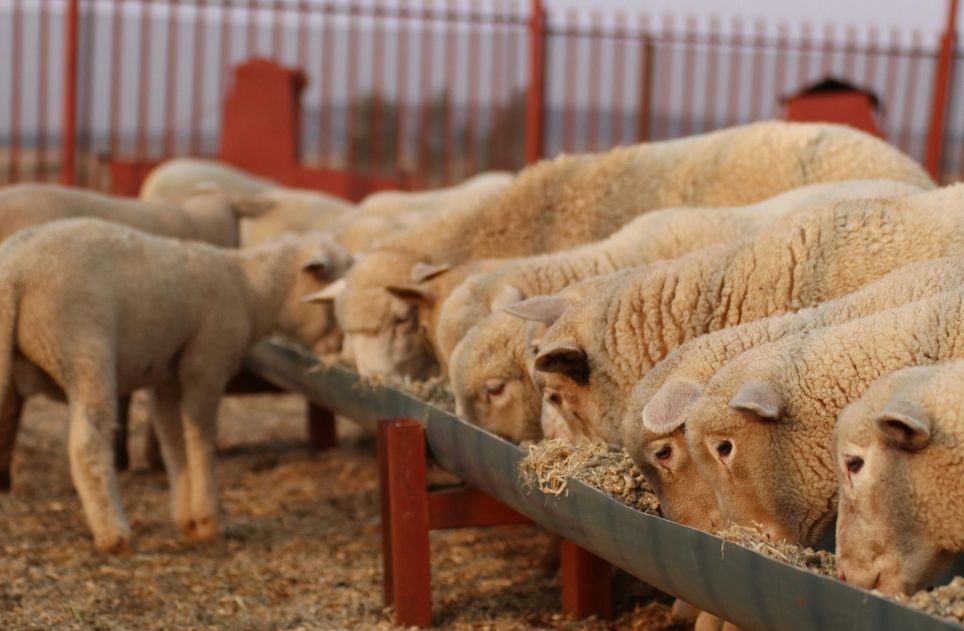
Confinement isn’t necessary for a short dry spell where paddocks are holding up. But if the dry spell runs for months, consider moving sheep into a confinement or containment area. This approach may be worth exploring given the following situations:
- Groundcover is running low: Sheep camping on bare paddocks while they wait for feed can cause damage. Taking them off the paddock protects your groundcover and soil.
- You expect to hand feed for a long time: Containment makes feeding more efficient because the sheep use less energy walking to find feed.
- You want to protect priority stock: Breeding ewes and weaners are easier to watch, draft and feed separately when they’re in a controlled area.
Sheep in full confinement need their entire diet supplied, so the ration must cover energy, protein, roughage and minerals. They also need clean water that is easy to reach, shade or shelter, and enough trough or trail space for every sheep to feed at once.
Make sure their pulpy kidney vaccination is up to date before you start, with a booster if the sheep haven’t been vaccinated recently, as the risk rises on grain-based diets.
Get Your Flock Through the Dry
A dry season is manageable when you have a plan. Feed the flock with the intent of holding their condition, prioritising energy for adult sheep. Introduce grain slowly and keep an eye on sheep’s condition scores so you can adjust before problems set in. Look after your breeders and weaners and consider confinement if your paddocks are under pressure.
The earlier you act, the cheaper and easier it is. Start by scoring a sample of your mob, working out your weekly feed budget and deciding whether you need to reduce numbers.
Csg Cowra makes quality sheep feed locally in Cowra, including Cattle & Sheep Nuts and Ewe & Lamb Pellet. Browse the full CowraFeed range or find your nearest stockist to get started.
Frequently Asked Questions
Feed a maintenance ration of cereal grain, sheep pellets or nuts, with roughage such as hay on the side. A dry adult sheep needs about 2.4 kg of grain a week, or the equivalent in pellets. Energy is an adult sheep’s priority, so keep enough in the ration to hold condition.
A dry adult sheep needs roughly 300 to 400 grams of cereal grain a day for maintenance, which is about 2.4 kg a week. Pregnant and lactating ewes and growing weaners need more, and weaners often require better-quality feed.
Sheep nuts and pellets are balanced, compressed feed made from a mixture of grains, roughage and minerals. They carry a lower risk of grain poisoning compared to raw grains, making them easier and safer to feed. Many producers feed sheep with complete pellets, with grain added when the budget is tight.
Build up slowly over two to three weeks. Start at around 50 grams per head and increase gradually, feeding every day, until the flock is on the full ration. Always provide roughage and add a calcium source to supplement mineral deficit in high-grain diets.
Adult dry sheep should be kept at condition score 2 or above, while ewes at joining and in late pregnancy should aim for score 3. Start feeding when half the mob drops to a low score 2, and feed thin sheep separately.