The right poultry feed keeps your birds healthy, growing well and laying consistently. With starter, grower and layer feeds on the shelf, plus whole grains, mash, pellets and crumbles to choose between, the key is matching the feed to your birds’ age, purpose and nutritional needs.
Get those choices right, and it shows in healthier birds, stronger eggshells and steadier laying. Feeding your flock well is simpler than the feed store makes it look. This blog covers feed forms, life-stage rations, essential supplements and the foods to keep out of the coop entirely.
In short: Use a complete feed suited to your birds’ life stage as the base of the diet (around 20% protein for chicks, 18% for growers, 16 to 18% for layers), keep treats and scratch grains to about 10% of intake, and always provide fresh water, grit and oyster shell for laying hens.
The Four Forms of Poultry Feed
Poultry feed comes in four main forms. The form affects how much is wasted and how easily young birds can eat it, but the nutrition depends on the feed itself, not the shape.
- Whole grains and scratch mixes: Unprocessed grains such as wheat, barley, corn and oats. They add variety, fibre and energy and encourage foraging, but on their own they are not a complete diet. Treat them as a supplement, not the main feed.
- Mash: A finely ground blend of grains and nutrients. Its soft texture suits young chicks, but because it is so fine, more ends up on the ground.
- Pellets: Ground ingredients compressed into a cylinder. Each pellet contains the same balanced blend, so birds cannot pick out favourites. Best for adult birds.
- Crumbles: Pellets broken into smaller pieces. Coarser than mash but easier than whole pellets, crumbles suit chicks and growing birds.
Feed form (pellets, crumbles, or mash) is mostly personal preference and bird age. What matters far more: it’s a complete ration formulated for the right life stage.
The right poultry feed is crucial in maintaining your bird’s health and productivity. With several different types of poultry feed available, it’s important to know the differences and choose an appropriate feed based on your birds’ nutritional requirements, age, and health.
Complete Feed Is the Foundation
A common mistake is treating whole grains or a scratch mix as the whole diet. Scratch is the poultry equivalent of a treat: tasty and useful for foraging, but low in the balanced protein, vitamins and minerals birds need. A quality complete feed should make up the bulk of intake, with grains and scraps accounting for only a small part. See what goes into your feed for how balanced feed is formulated.
Feeding by Life Stage
Nutritional needs change as birds grow. Protein requirements fall after the rapid early growth phase, while calcium rises sharply once hens start laying. This table sums up the targets for laying breeds.
| Life stage | Age | Protein | Calcium | Feed type |
| Chicks | 0 to 8 weeks | 18 to 20% | Low | Starter (crumble or mash) |
| Pullets | 8 to 18 to 20 weeks | 18 to 20% | Low | Grower / pullet feed |
| Laying hens | 20 weeks and up | 16 to 18% | 3.5 to 4% | Layer feed (pellet or crumble) |
| Meat birds | Varies | 20 to 24% starter, ~18% finisher | Low | Broiler starter then finisher |
This table provides indicative values based on average requirements and scenarios, and is intended as a general guide only. Figures are based on CSIRO guidelines and Feeding Livestock Victoria resources. For advice tailored to your livestock, please consult a qualified nutritionist.
- Chicks (0 to 8 weeks) need a high-protein starter feed, around 18 to 20% for laying breeds, with extra vitamins and minerals for bone and feather development. Keep the feed finely ground, provide clean water at all times and hold off on treats and scraps. They also need access to clean water at all times to prevent dehydration and aid in digestion.
- Pullets (8 to 18 to 20 weeks) move onto a lower-protein grower feed, around 18%, with modest calcium. It also contains added vitamins and minerals for steady development without excess weight gain or maturing them too fast. You should also provide your pullets with plenty of clean water and change their feed regularly to ensure freshness.
- Laying hens (20+ weeks and up) need a balanced layer feed of around 16 to 18% protein for egg production, plus 3.5 to 4% calcium for strong shells. Additionally, vitamins A, D, E and K and minerals such as phosphorus are important for supporting their overall health. Hens also require carbohydrates to provide energy for their daily activities and fat to support their egg production. The clearest sign it’s time to switch: the first egg or reddening combs and wattles.
Scratch grains or kitchen scraps can supplement your hens’ diet but should only make up a small portion of it. Clean water and appropriate environmental conditions are also critical for maintaining their health and productivity. - Meat birds (broilers) grow fast and need more protein: a broiler starter of 22 to 24%, moving to a finisher of around 18%. Do not feed laying hens a broiler ration in the long run.
Important: Do not feed layer feed to birds under 18 weeks or to roosters. The high calcium (3 to 4%) can cause permanent kidney damage in non-laying birds. For mixed-age flocks, feed an all-flock or starter/grower ration to everyone and offer oyster shell separately, so laying hens can top up calcium as they need it.
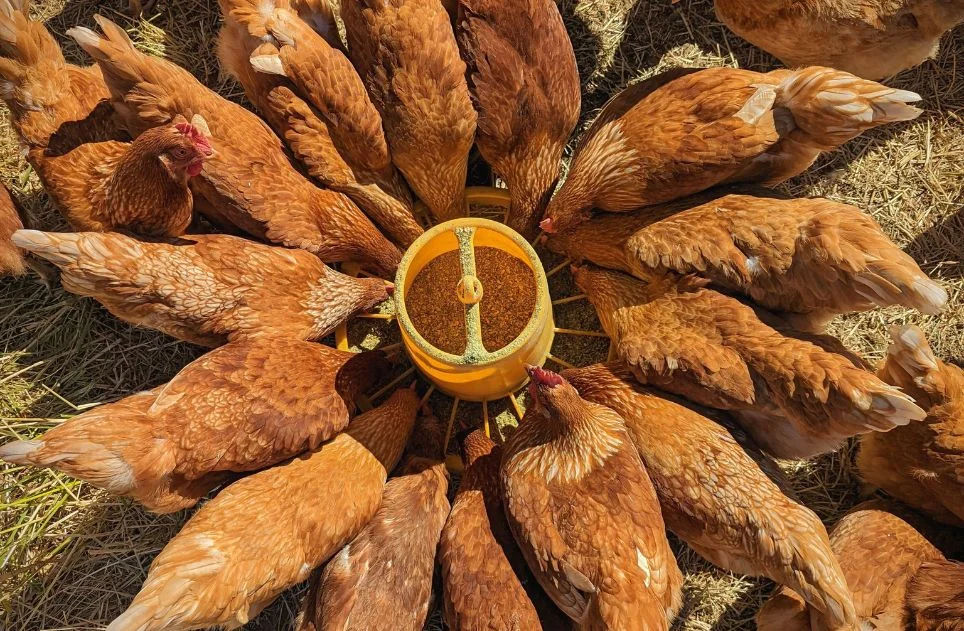
Medicated vs Unmedicated Starter
Starter feed comes in both medicated and unmedicated versions. Medicated starter usually contains amprolium, a coccidiostat that protects chicks from coccidiosis, a common and potentially fatal intestinal disease spread through droppings. The catch: if your chicks have already been vaccinated against coccidiosis, medicated feed cancels out the vaccine. Use an unmedicated starter for vaccinated chicks, and ask your supplier or hatchery about the vaccination status if you are unsure.
Grit and Oyster Shell: Two Different Supplements
Grit and oyster shells are often confused, but they do completely different jobs and most flocks need both, offered free-choice in separate containers.
| Supplement | What it is | What it does | Who needs it |
| Grit | Insoluble granite or stone | Sits in the gizzard and grinds food, since chickens have no teeth | Any bird eating grains, greens or forage |
| Oyster shell | Soluble calcium carbonate | Dissolves to supply calcium for strong eggshells | Laying hens only |
Chickens that eat anything beyond pellets or crumbles, including scratch grains, greens or bugs, need grit to digest it. Birds on coarse soil may find enough naturally, but free access removes the guesswork. Oyster shell is different: a slow-release source of calcium for laying hens. Offer it on the side rather than mixing it in, so non-laying birds and roosters do not over-consume calcium. A hen short on calcium will draw it from her own bones and lay thin or soft-shelled eggs.
Treats, Scratch and Foods to Avoid
Treats and kitchen scraps are fine in moderation. A good guide is the 90/10 rule: about 90% of the diet comes from complete feed and no more than 10% from scratch grains, vegetable scraps and the occasional fruit. Overdoing treats dilutes the balanced nutrition birds need for laying and feather condition.
Some foods should never reach the coop. It’s essential to keep these away from your flock:
- Avocado (skin, flesh and pit contain persin, which can be fatal)
- Chocolate, coffee and tea (theobromine and caffeine affect the heart)
- Raw or dried beans (contain toxic lectins until cooked)
- Green or raw potato and green tomato (solanine)
- Apple seeds and stone-fruit pits (release cyanide)
- Mouldy or spoiled food and very salty or heavily processed food
- Onions in large amounts (can affect red blood cells and egg flavour)
How Much to Feed and Watering
Most adult hens eat roughly 120 to 150 grams of feed a day, varying with breed, size, activity and laying status. For backyard flocks, free-choice feeding works well: birds eat small amounts throughout the day and self-regulate. Always keep clean, fresh water available, keep feed dry to avoid mould and clean feeders and drinkers regularly.
CowraFeed Poultry Range
CowraFeed produces quality poultry feed milled and mixed locally. A few popular options from the CowraFeed poultry range:
| Product | Description |
 | Feed Wheat Uncleaned wheat for feeding poultry and some birds. Can be combined with other mixes to boost protein levels. |
 | Scratch Mix Ideal for growing chickens and adult fowls, and suitable for other poultry. Encourages birds to scratch and forage. Comprised From: Wheat, Barley, Sorghum, Cracked Corn, Cracked Lupins, Black Sunflower, Triticale, Oats, Vegetable Oil. |
 | Complete Layer Blend A premium complete layer mix which includes shellgrit and natural yolk pigments for higher-quality eggs. Suitable for all ages and classes of poultry. Comprised From: Wheat, Barley, Sorghum, Cracked Corn, Cracked Lupins, Black Sunflower, Shellgrit, Enzymes, Vitamins, Mineral Premix, Molasses, Layer Pellets. |
 | Chick Starter Crumble A complete crumbled feed for poultry chicks from day old up to 8 weeks of age. Finely textured to suit tiny beaks, it’s formulated with essential protein, vitamins and minerals for strong early growth, healthy bone and feather development from hatch. Comprised From: Barley, Wheat, Lupins, Oats, Mill mix, Canola Meal, Salt, Limestone, Oil, Vitamin & Mineral Premix |
 | Pullet Grower Crumble A complete crumbled feed to carry 8 weeks of age through to point of lay at around 18 weeks of age. Protein levels are moderated to build a strong, even frame without rushing birds into lay too soon, while balanced calcium and trace minerals set them up for a long, productive laying life. Comprised From: Barley, Wheat, Lupins, Oats, Mill mix, Canola Meal, Salt, Limestone, Oil, Vitamin & Mineral Premix |
 | Balanced Layer Pellets A complete feed designed for laying hens from point of lay (around 18 weeks of age) onwards. The pellet form means less waste and no selective feeding, so every bird gets what it needs for strong shells and steady production. Ideal for free range and backyard laying hens. Comprised From: Barley, Wheat, Lupins, Oats, Mill mix, Canola Meal, Salt, Limestone, Oil, Vitamin & Mineral Premix |
 | Ultra Layer Mash Providing high protein and energy, this is a complete feed designed for laying hens from point of lay (around 18 weeks of age) Suited to breeding operations and commercial flocks, with the finer texture some hens prefer. Comprised From: Barley, Wheat, Lupins, Oats, Mill mix, Canola Meal, Salt, Limestone, Oil, Vitamin & Mineral Premix |
Not sure what suits your flock? Find your nearest stockist or talk to the team at CowraFeed.
Frequently Asked Questions
- What is the best feed for laying hens?
A complete layer feed with around 16 to 18% protein and 3.5 to 4% calcium, fed from about 18 weeks or the first egg. Offer oyster shell free choice for extra calcium and keep treats to about 10% of the diet. - Can chickens eat kitchen scraps?
Yes, in moderation. Leafy greens, vegetable peelings, cooked rice and most fruit are fine as part of the 10% treat allowance. Avoid avocado, chocolate, raw beans and green or mouldy food. - When should I switch from starter to layer feed?
Move chicks to a grower feed at around 8 weeks, then to layer feed at about 18 weeks or when the first egg appears. Switching to layer feed too early exposes young birds to calcium levels that can damage their kidneys. - Do chickens need grit if they are free-range?
Often, yes. Birds on coarse, gravelly soil may find enough naturally, but those on clay, lawn or pasture should be offered insoluble grit free-choice so they can grind their food properly. - How much should a chicken eat per day?
Around 120 to 150 grams of complete feed per adult bird daily, depending on breed, size and laying status. Free-choice feeding lets birds eat little and often and self-regulate their intake.
Getting Your Flock’s Diet Right
The best feed for your poultry is a complete ration matched to their life stage: high-protein starter for chicks, a lower-protein grower for pullets and a calcium-rich layer feed for hens in lay. Build the diet on quality complete feed, keep treats and scratch to around 10%, supply grit for digestion and oyster shell for layers and always have clean water available. Get those basics right and your flock will stay healthy, productive and laying well.
Explore the full CowraFeed poultry range or find a stockist to get started.