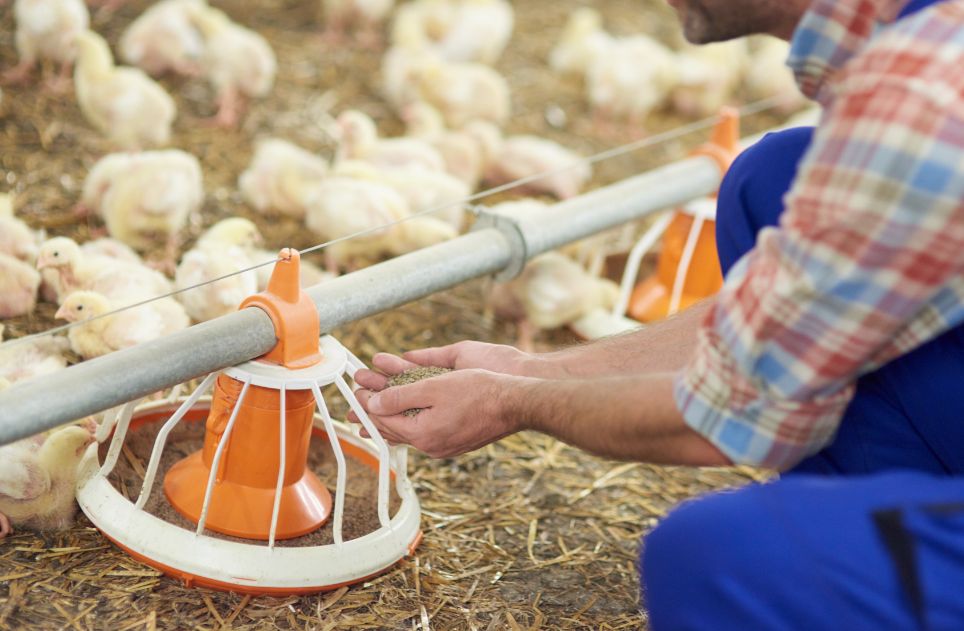
Raising chicks is simple once you know the feeding stages. Start with a high-protein chick starter feed/crumble for the first 6 weeks, move to a pullet grower from 6 to 18 weeks, then switch to layer feed at 18 weeks or when the first egg appears. Get the timing right and you raise healthy birds that lay well.
This guide walks through each stage: what to feed, how much protein birds need, and when to make the change.
The Three Feeding Stages at a Glance
|
Stage |
Age |
Protein |
Feed |
|
Starter |
0 to 6 weeks |
18 to 20% |
Chick starter crumble |
|
Grower |
6 to 18 weeks |
16 to 18% |
Pullet grower crumble |
|
Layer |
18 weeks and on |
About 16%, plus calcium |
Layer pellet or blend |
Each stage matches how fast the bird is growing and what its body needs. Feeding the wrong stage, especially layer feed too early, can cause real harm. More on that below.
How Much Should They Eat?
Let birds feed themselves. It’s essential to always keep feed available and they will eat what they need. Chickens rarely overeat on a balanced ration.
As a rough guide, a grown hen eats about 100 to 120 grams of feed a day. Chicks and pullets eat less and build up as they grow. Use a feeder that stays clean and dry and top it up before it runs empty. Always have fresh water nearby, as birds drink far more than people expect, especially in hot weather.
Stage 1: Day One to 8 weeks (Chick Starter)
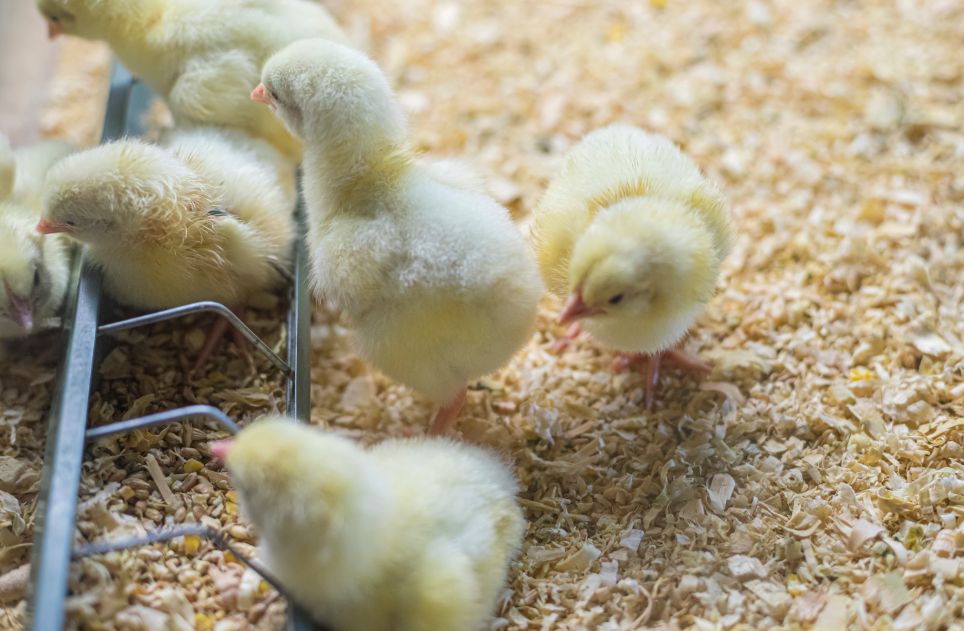
Newly hatched chicks grow fast. Their organs, bones and immune system all develop in these first weeks, so they need plenty of protein.
Chick starter crumble should be the only thing your chicks get for the first 6 weeks. Look for around 18 to 20% protein. Available as a crumble, this form suits tiny beaks and is easy to digest. Keep clean water available at all times and keep the brooder warm. Start at about 32-35°C and lower it a few degrees each week as the chicks feather up.
Medicated or non-medicated chick starter feed – Which to choose?
Medicated chick starter contains a coccidiostat that helps prevent coccidiosis, a common gut disease in young birds. Choose non-medicated if your chicks were vaccinated against coccidiosis, or if you prefer. Check the bag label and your hatchery’s advice.
Do not feed treats or scratch grains at this stage. Chicks need every mouthful to be balanced. Save blends like scratch mix for grown birds.
Stage 2: 8 to 18 weeks (Pullet Grower)
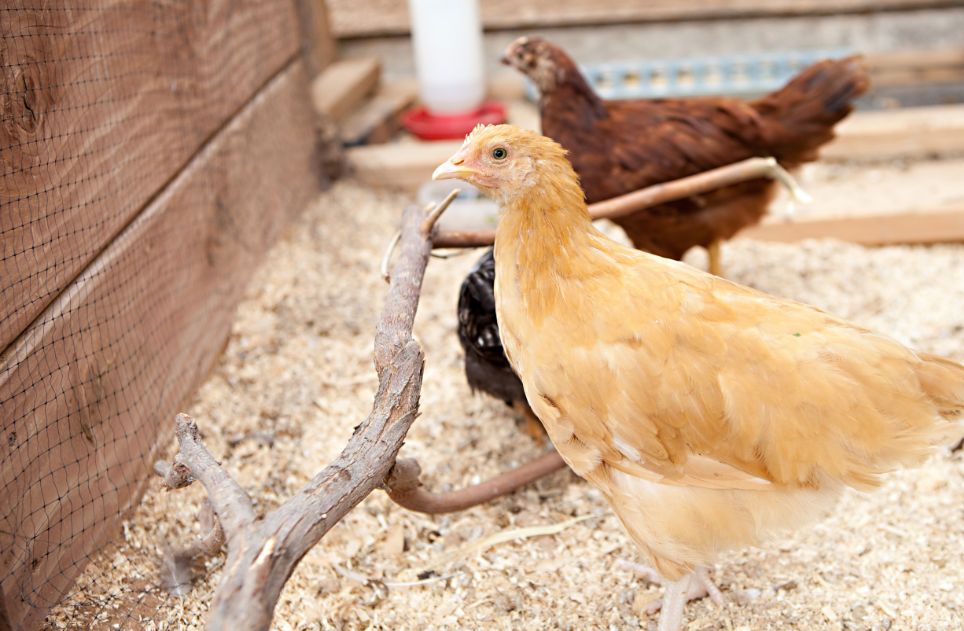
At around 6 weeks, growth slows down and the chick starter feed has done its job. Your birds are now pullets, young females not yet laying. They no longer need as much protein and too much can push them to grow too fast.
Switch to a pullet grower crumble with about 16 to 18% protein. This supports steady, even growth and lets the body develop properly before laying starts.
Keep the calcium low at this stage. Grower feed has roughly 1% calcium, which is all a growing pullet needs. This is the time to let them mature, not to rush them.
If your birds start eating treats, forage or whole or cracked grains, give them access to insoluble grit. Grit helps the gizzard grind these coarser foods for digestion. Birds fed only a complete crumble, mash or pellet generally don’t need additional grit.
Stage 3: 18 weeks to First Egg (Layer Feed)
The big change comes at point of lay. This is when a pullet is ready to lay her first egg and her body needs extra calcium for strong shells.
Switch to a balanced layer pellet at 18 weeks, or as soon as you see the first egg, whichever comes first. Layer feed has about 16% protein and around 4% calcium. That calcium is the key difference. A laying hen pulls a lot of calcium from her diet to build each shell.
Make the switch gradual. A sudden feed change can upset the gut. Move across over about a week:
- Days 1 to 2: Three parts grower to one part layer
- Days 3 to 4: Half grower, half layer
- Days 5 to 6: One part grower to three parts layer
- Day 7: All layer feed
Why not provide layer feed early?
This is the most common and most costly mistake. Layer feed has about four times the calcium of grower feed. A young bird that is not laying cannot use all that calcium. The excess strains the kidneys, can damage bone development and may lower egg production later in life. Wait for 18 weeks or the first egg. Never rush it.
What if your Birds are Different Ages?
Most backyard flocks end up with mixed ages and the stage-by-stage plan gets harder to follow when a point-of-lay pullet is sharing a feeder with an eight-week-old.
The rule is to feed the youngest bird. Put the whole flock on pullet grower, then offer shell grit free choice in a separate container. Laying hens will take the calcium they need from the grit, and the younger birds will leave it alone.
Roosters work the same way. They have no use for the calcium in layer feed, so grower plus free-choice shell grit suits them for life.
Keep chicks under 6 weeks separate where you can, so they stay on chick starter feed without competing with bigger birds.
When do Chickens Start Laying?
Most hens start laying between 18 and 22 weeks of age. The exact timing depends on the breed.
- Commercial layers like ISA Browns often start early, around 18 weeks or even sooner.
- Most backyard breeds start between 18 and 22 weeks.
- Heritage and larger breeds can take up to 24 weeks or more.
Daylight matters too. Hens lay best with around 14 hours of light a day, so birds reaching maturity in autumn or winter may hold off until spring. The first eggs are often small and a little irregular. That is normal and settles down within a few weeks.
Signs your pullet is about to lay
You can often tell laying is close by watching your birds. A few clear signs:
- Red comb and wattles: These brighten and grow as a pullet matures.
- Squatting: She crouches low with wings slightly out when you approach.
- Exploring nest boxes: She starts poking around and settling into them.
- Louder, chattier behaviour: Many pullets get noisier just before they lay.
When you notice these signs, make sure she is on layer feed so the calcium is there when she needs it.
Four Mistakes to Avoid
Keep these in mind and you will raise a strong, productive flock:
- Layer feed too early: The calcium harms growing birds. Wait for 18 weeks or the first egg.
- On chick starter feed for too long: Staying on high protein past 6 to 8 weeks can push birds to grow too fast.
- No grit: Once birds eat anything other than crumble, they need grit to digest it.
- A sudden feed change: Always transition over about a week to protect the gut.
Frequently Asked Questions
- What is chick starter feed?
Chick starter feed is a high-protein ration, around 18 to 20% protein, made for chicks from day one to about 6 weeks. It usually comes as a crumble so small beaks can manage it. It should be the only feed chicks get at this age. - What should I feed baby chicks?
Feed a chick starter crumble with around 18 to 20% protein as their only food for the first 6 weeks. Provide clean water at all times and keep them warm. Do not give treats or scratch grains at this age. - Is medicated or non-medicated chick starter feed better?
Both work. Medicated starter helps prevent coccidiosis, a common gut disease in chicks. Choose non-medicated if your chicks were vaccinated against coccidiosis or you prefer to avoid medication. Check the label and your hatchery’s advice. - When do I switch from grower to layer feed?
Switch at 18 weeks of age, or when you see the first egg, whichever comes first. Do not switch earlier. The high calcium in layer feed can harm birds that are not yet laying. - When do chickens start laying eggs?
Most hens begin laying between 18 and 22 weeks. Commercial layers can start a little earlier, while heritage breeds may take up to 24 weeks. Shorter winter days can delay the first eggs until spring. - Do chicks need grit?
Not while they only eat starter crumble. Once they start eating treats, forage or grains, they need insoluble grit to grind the food down in the gizzard and digest it properly. - Can chicks and laying hens eat the same feed?
Not the same layer feed, no. In a mixed-age flock, feed everyone pullet grower and offer shell grit free choice on the side. The hens take the calcium they need and the young birds leave it alone. Chicks under 6 weeks should stay on chick starter feed, separately where possible.
Raise your Flock on Feed Made in Cowra
Healthy hens start with the right feed at the right age. CSG’s poultry range covers every stage, from chick starter feed/crumble and pullet grower crumble through to balanced layer pellet, all grown and milled locally in Cowra.
Browse the full CowraFeed poultry range or find your nearest stockist to get started.