Canola is one of the trickiest crops to establish. The seed is small, it carries relatively little stored energy and its early vigour is modest compared with cereals, so plant populations often vary widely even when crops are sown at the same rate. Field establishment commonly sits around 50 to 60% and can drop to 30% or less in harsh conditions. With so much riding on getting an even, vigorous strike, canola seed grading is one of the simplest and most cost-effective ways to tilt the odds in your favour.
This guide explains what canola seed grading is, why it matters so much for this crop and how it improves the result in the paddock, particularly when you are sowing retained seed.
In short: Seed grading sorts seed by size and density, keeping the larger, heavier, more vigorous seed while removing small, damaged or light seed and trash. For canola, that means better germination, faster and more even emergence, stronger early vigour and more reliable plant stands. The benefit is greatest for retained seed and when sowing into tougher conditions.
What is Seed Grading?
Seed grading is the process of classifying seed by size, shape, colour or density to lift its overall quality. By screening out undesirable material, damaged grain and the lighter, less vigorous seed, grading leaves you with a more uniform sample made up of the heavier, healthier seed.
The goal is to carry quality seed from one season to the next. Removing trash, weed seeds and the small or immature fraction means what goes in the seeder is consistent and vigorous, rather than a mixed bag where a meaningful share may never establish.
Why Canola Establishment is So Challenging
To understand why grading pays off for canola, it helps to understand the crop’s weak spot. A canola seed is the entire energy source for the seedling until it grows leaves and can photosynthesise. A bigger seed holds more of that energy, so it germinates and emerges more strongly. A small seed has less in reserve, which means slower, weaker establishment and lower early vigour.
Because canola seedlings are so small, they are also unusually vulnerable to fungal disease, insect attack, fertiliser toxicity and soil crusting during those first critical weeks. Any setback at establishment tends to flow through to the rest of the season, either directly as lost yield or indirectly through greater exposure to weed, pest and disease pressure. Starting with the best possible seed removes one of the biggest variables.
The Benefits of Grading Canola Seed
Both expert official tests and practical results have proven that proper seed grading gives a dramatic increase in yield – up to 45%. Grading delivers several clear, practical advantages:
- Better and faster emergence. Larger, heavier seed consistently improves emergence and early biomass. Research points to seeds of at least 1.8 mm as the threshold where most of the establishment benefit is captured. Grading over 1.8 mm screen lifts average seed weight to around 4 milligrams.
- Stronger early vigour. More stored energy means seedlings that get up and away quickly, which matters most when conditions are marginal.
- More even, reliable plant stands. Removing the small and dead seed tightens up germination and emergence, so the plant population you target is closer to the one you get.
- Cleaner seed. Grading strips out weed seeds, trash and damaged or diseased material that can reduce performance or carry problems into the new crop.
- A yield edge where it counts. Canola can partly compensate for thin stands by branching, so in ideal conditions the final yield difference may be modest. But under stress, such as deeper or earlier sowing, marginal moisture or harsh seedbeds, larger graded seed has been shown to lift both early biomass and grain yield. That is exactly when reliable establishment is hardest to achieve.
In short, grading does not guarantee a yield jump in every paddock, but it reliably reduces establishment risk, and lower risk is what protects yield across variable seasons.
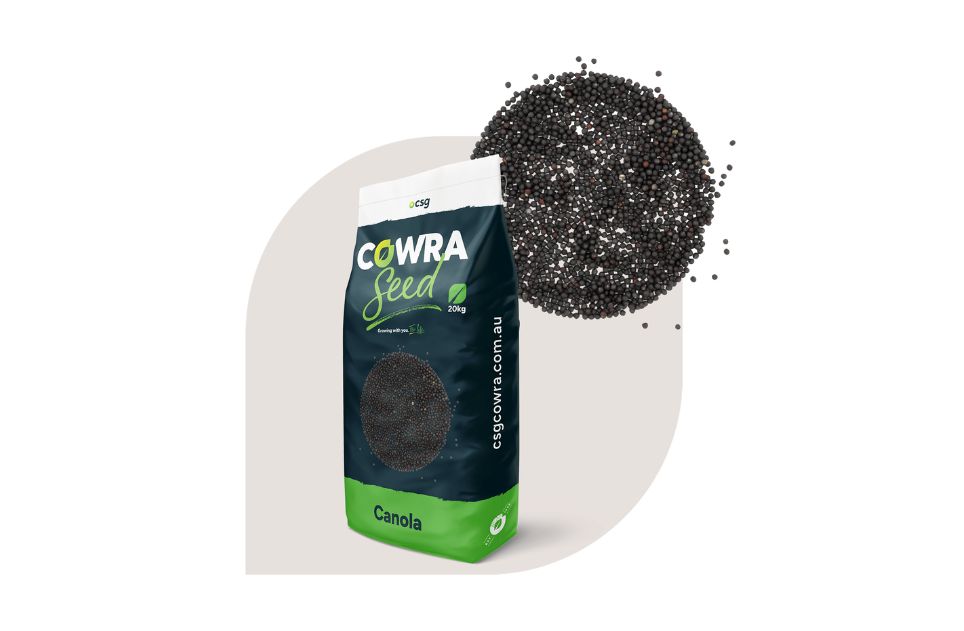
What Screen Size Should You Use to Grade Canola Seed?
Screen size is the main lever in canola seed grading. NSW DPI research recommends grading to at least 1.8 mm, and GRDC recommends a 2 mm screen for retained open-pollinated seed.
| Screen size | What it does |
| Below 1.6 mm | Always remove. Very small seed produces more abnormal seedlings and has weaker seed coats. |
| 1.8 mm | The recommended minimum. Captures most of the establishment benefit, at around 4 g per 1,000 seeds. |
| 2.0 to 2.2 mm | Better establishment again, especially when sowing deeper, but only a small share of a sample is this large. |
The trade-off is volume. Only a small share of a typical sample is 2 mm or larger, so the harder you grade, the more seed you need to put through the grader to end up with enough to sow.
Retained Canola Seed: Where Grading Matters Most
The case for grading is strongest when you are sowing retained seed. Retained seed, especially after a dry season, is often noticeably smaller and more variable than seed bought directly from the breeder, and its germination and vigour are usually unknown.
Growers who keep their own seed (commonly open-pollinated or TT types) also face two longer-term issues: germination and vigour that can decline over successive generations, and there is a risk of genetic drift. Retaining hybrid seed is a different proposition: GRDC trials found that seed kept from a hybrid crop (F2 seed) established fewer plants and returned less than fresh F1 hybrid seed, even when graded to 1.8 mm or larger. Retained canola seed can also carry blackleg, so disease management matters too. Grading, combined with a germination test and a protective seed treatment, turns an unknown quantity into a reliable one. Our guide on why quality seed matters covers the broader case for starting clean.
Grade, Test, Then Set Your Seeding Rate
Grading also makes your seeding rate far more accurate. Canola is best sown to a target plant density, often in the range of 20 to 50 plants per square metre. To hit that target you need two numbers: the germination percentage and the thousand-seed weight (or seed size). Grading improves both the consistency and the weight of the seed, and removes the dead and tiny fraction that would otherwise throw out your calculation.
The practical sequence is simple: grade the seed, run a germination test, then use the germination result and seed weight to calculate the kilograms per hectare needed for your target density. For more on timing that crop into the right window, see sowing winter crops early.
How CowraSeed Grades Canola Seed
At CowraSeed, we professionally clean canola seed by removing foreign material and screening out the lighter grain, so you retain only the most vigorous, healthy seed for sowing. The smaller fraction we remove is treated and bagged to your requirements and can be sold at market rates, so nothing is wasted.
We also offer seed treatment, professionally coating your canola seed with fungicide and insecticide to protect young seedlings against disease and early insect pressure through establishment. Graded, treated seed gives your canola crop the strongest possible start.
Frequently Asked Questions
- What is canola seed grading?
It is the process of sorting canola seed by size and density to keep the larger, heavier, more vigorous seed and remove small, damaged or light seed along with trash and weed seeds. The result is a cleaner, more uniform, higher-vigour seed lot.
- Does seed grading increase canola yield?
It reliably improves germination, emergence and early vigour, which lowers establishment risk. The final yield benefit is greatest under stress, such as deep or early sowing or marginal moisture, and for retained seed. In ideal conditions canola can compensate for thinner stands, so the yield gain may be smaller.
- Is it worth grading retained canola seed?
Yes. Retained seed is often smaller and more variable, with unknown germination, and its quality can decline over successive seasons. Grading, testing and treating retained seed makes establishment far more reliable.
- What seed size should I aim for in canola?
Aim for seed of at least 1.8 mm, which captures most of the establishment benefit and lifts seed weight to around 4 milligrams. Grading over a 1.8 mm or 2 mm screen helps achieve this.
- Should I treat canola seed after grading?
Treating graded seed with a fungicide and insecticide is recommended, especially for retained seed. It protects small, vulnerable seedlings against disease (including blackleg carryover) and early insect pressure during establishment.
Make Every Canola Seed Count
Canola gives you little margin at establishment, so anything that improves the odds of an even, vigorous strike is worth doing. Grading keeps only the heavier, more vigorous seed, lifts emergence and early vigour, and makes your plant stand and seeding rate far more predictable, with the biggest gains on retained seed and in tougher conditions. Paired with a germination test and seed treatment, it is one of the cheapest forms of insurance you can buy for a canola crop.
Ready to get more from your canola seed? Talk to CowraSeed about cleaning, grading and treating, or explore the CowraSeed range.